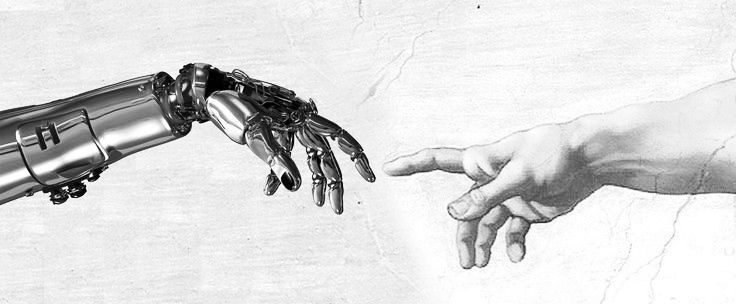
The question is everywhere: Who is going to win the AI race? Yet few are asking a deeper one: Who is already left behind in this iconoclast revolution of power, speed, and algorithms? And why? What if this race isn’t about who wins, but who masters the comprehension of it and what it means to be human in this avant-garde digital age?
The answer points to a familiar pattern: centralizing control instead of distributing it. Every technological revolution has pursued ambition and the capacity of control from the internet to social media, from data to AI, each following the same mechanical equation.
History doesn’t repeat; it reveals. Every architect ends up being shaped by the very invention they construct.
We witness it in the course of software becoming a digital monopoly. China built its own cybernated market playground: Baidu for research, Tencent and WeChat for communication, and more. Meanwhile, the United States turned global data and surveillance infrastructure into a currency. Differently, Europe established regulations like GDPR and fiscal limits that constrain global access to the internet. Each block consolidated its online empire, but none defined a moral one.
Thus, a new ecosystem mutated, one in which data and automation serve as the new oil. Whoever controls them dominates the global market and the battlefield of satellites, AI, and privacy. Still, those willing to act upon the neuralgic intervention of AI in this society can reformulate the parameters through which AI grows and sets the pace in the coming years.
The core of this satire is that the same instruments meant to empower humans are now devaluing the cost of being one. We gave birth to the smartest tools, only to find ourselves imposed by unreachable measurements against them. The question is no longer whether AI will displace us, but whether we will still know what makes us irreplaceable.
The fallacy of progress hides an uncomfortable truth: the boom of AI is not born of superiority but of cheaper exploitation. High interest rates make human labor too expensive, so firms automate, replacing workers with AI. What was once a promise of novelty and expansion has now become a cost-effective system of silent cutbacks.
Efficiency without ethics is the new inflation. It decries meaning faster than money. In a lifestyle produced on expensive credit and high interest rates, AI engines become a low-cost industry force. This leads to an oddity: the same interest rates meant to cool inflation are funding the age of AI efficiency and consumption.
As digitalization extends its roots, new legal roots must emerge. Who is responsible when an AI model makes the layoff decision? The archaic framework of employer accountability is entrenched in labor law that protects human decision-makers but not code systems, which are efficient, unbiased, and extremely demanded.
What does this demand promise? Exponential productivity. More than a promise, it is a result. But is that result directed toward people’s safety or toward a monolithic flow of wealth?
Governments are beginning to deliberate on the tax implications of automated output: digital levies, robot taxes, and a new fiscal framework. Without a harmonized tax groundwork, the risks grow, reinforcing concentrated profits while human wages erode, or as some of them begin to recede entirely.
As the competition to capitalize on the AI revolt accelerates, enterprises splurge their money on data centers. Civilization’s essence persists and belongs to those who absorb profoundly, who question, who create with conscience.
To understand AI is to understand its political economy, because the real rebellion is cognitive and institutional: the merging of private innovators and states to capture control over intelligence itself.
As the AI eclipse begins, many remain entranced by the technological overload and feel the AI’s rise as the restoration of white-collars jobs. But I perceive a stage of resilience, an evolution of economic adaptation. I see an epoch where the individuals who learn and who dare curiosity and confront the political economy, the markets, and the structures behind algorithms, will define the consciousness of AI itself.
Leave a Reply